Water in Your Basement: Mitigation or Your Contractor?
Pipe burst in your basement? Learn how mitigation companies get paid, what “subbing out” means, and whether to let them handle repairs or hire your own contractor.
Water in the Basement… Now What?
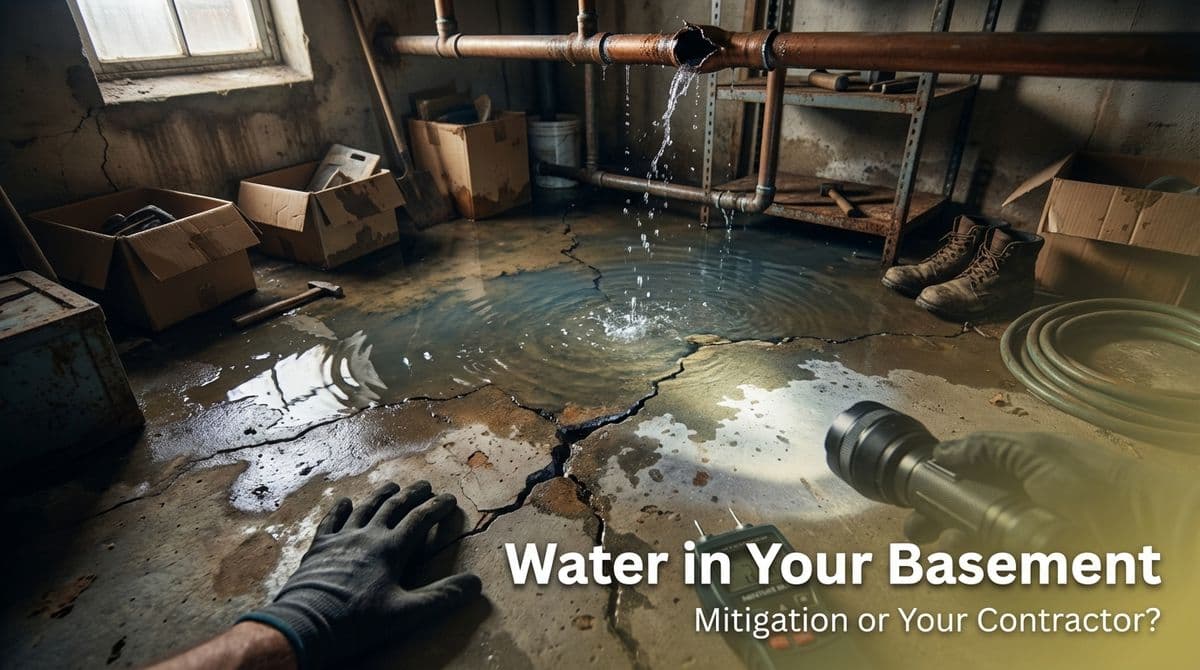
We recently got a call from a homeowner — let’s call him Mark — who’d had a pipe burst in his basement right after New Year’s. The water mitigation company came out quickly, dried everything, pulled out damaged materials, and then told him, “We can handle all the finishing work too — painting, trim, doors, flooring, the whole thing.”
When Mark called us, we walked him through what that really means, because we get calls like his all the time after basement floods. The mitigation company had already submitted the paperwork to his insurance and the check for mitigation alone was around $9,000, which shocked him. On top of that, he was nervous because the company wasn’t even local to his city, and he wasn’t sure if he should let them handle the repairs or hire his own contractor.
If you’re in the same boat, here’s how this all works and how we guide homeowners in your situation based on what we see in homes like yours every week.
What Does a Water Mitigation Company Actually Do?
Mitigation companies specialize in the emergency phase after water damage — the “stop the bleeding” part:
- Extract standing water
- Set up fans and dehumidifiers to dry everything out
- Remove soaked drywall, insulation, flooring, and trim
- Treat for potential mold or contamination
In many losses, they’ll also help document the damage and send that information to your insurance company. In Mark’s case, they even acted like an adjuster — assessing the damage, writing up the scope, and submitting it for payment.
Mitigation is usually billed directly to insurance and, in our experience, the rates are high because it’s emergency work with lots of equipment and labor. That’s why homeowners often feel a bit of sticker shock when they see that first mitigation bill.
What Does “Subbing Out” the Repairs Mean?
Here’s the part that confused Mark: the same company that did the drying told him they could also do all the rebuild work. But in our experience, most mitigation companies are not actually remodelers. Instead, they typically:
- Hire local subcontractors (carpenters, painters, flooring installers) to do the repair work
- Add their own markup on top of what those subs charge
- Manage the paperwork and communication with your insurance
This is what we mean by “subbing it out.” The mitigation company is more like a middleman or project manager for the rebuild, not the crew actually swinging the hammers.
That’s not automatically bad — but it does affect timelines, cost, and control, which is usually where homeowners run into frustration.
Option 1: Let the Mitigation Company Handle the Rebuild
There are some advantages to letting the mitigation company carry the repairs through to the end:
- One point of contact for insurance paperwork and documentation
- They already know the scope of damage and have photos, moisture readings, etc.
- Insurance is often used to working with them and may process invoices quickly
But we also see some common downsides in homes like Mark’s:
- Longer timelines: Because they’re coordinating subs, jobs can sit while they try to schedule different trades.
- Less control over who’s in your home: You usually don’t get to choose the actual carpenter, painter, or flooring installer.
- Higher overall cost: Every layer of management adds markup; insurance may pay it, but it can limit what’s left for upgrades or better finishes.
- Mixed quality: Some subs are excellent, others not so much — and you may not know who you’re getting.
For some homeowners who want to be as hands-off as possible, this setup feels convenient. For others, especially when the company isn’t local, it can become a headache.
Option 2: Hire Your Own Local Contractor
Your other choice is to use the insurance money to hire your own basement contractor or remodeler. In our experience, that often gives you:
- More control over quality: You can check reviews, see past projects, and choose someone you trust.
- Clearer communication: You’re talking directly to the person responsible for the work, not a middle layer.
- Flexible design choices: You can often tweak layouts, upgrade materials, or improve the space instead of just “putting it back.”
The trade-offs:
- You or your contractor may need to coordinate more directly with the insurance adjuster.
- There can be some back-and-forth on the scope and pricing to match the insurance estimate.
For homeowners like Mark who are uneasy about a non-local company and want to know exactly who’s doing the work, this route usually feels more comfortable and often results in better long-term satisfaction.
Timeline, Quality, Cost & Key Questions to Ask
Whether you use the mitigation company or hire your own contractor, here’s how we see the big three factors shake out:
- Timeline: Ask, “When can you start, and how long will it take?” Mitigation companies often take longer because they’re fitting you into sub schedules. A dedicated remodeler may give a tighter, more realistic schedule.
- Quality: Ask to see photos of similar projects, confirm who will actually be in your home, and what warranties they provide on workmanship.
- Cost: Get a written, itemized estimate and compare it to the insurance scope. Ask, “If insurance pays X, who is responsible for any difference?”
Before you sign anything with any company, we recommend asking:
- Are you doing the work yourselves, or subbing it out to others?
- Are you licensed, insured, and local to this area?
- How do you handle change orders if hidden damage is found?
- Will you communicate directly with my insurance adjuster?
- Can I choose materials (flooring, trim, paint) within the insurance budget?
In our experience, good contractors — whether mitigation-based or independent — will answer these questions clearly and in writing.
Our Advice If You’re Where Mark Was
When we finished talking with Mark, our guidance was simple: you’re not stuck with the mitigation company for the rebuild just because they handled the drying. You absolutely can use them, but you’re also free to hire your own local contractor and use the insurance funds for that work.
If you’re unsure which way to go, reach out to a trusted local contractor, share the insurance estimate, and ask them to walk you through your options. A 10–15 minute conversation can make the difference between months of frustration and a basement you’re happy to spend time in again.
And if you’ve just had water damage and don’t know what to do next, we’re always happy to look at your scope, explain the fine print, and help you choose the path that makes the most sense for your home.