Full Deck Repair and Rebuild Ready for a Minnesota Summer
Minnesota winters are hard on decks. Freeze-thaw cycles, moisture, and years of wear add up fast - and what starts as a few soft boards can turn into a safety issue if the framing underneath is compromised. That's exactly what we were dealing with on this one.
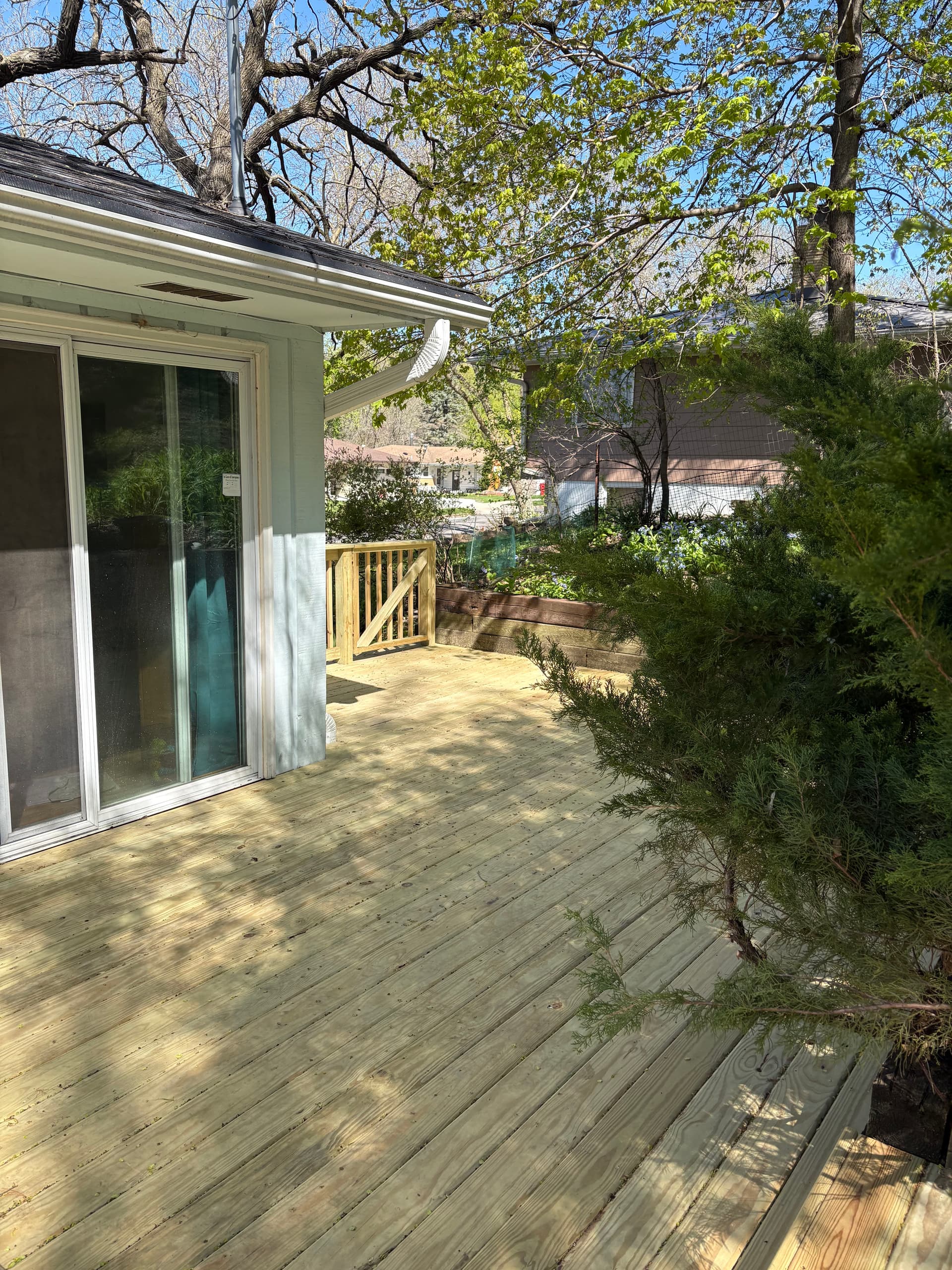
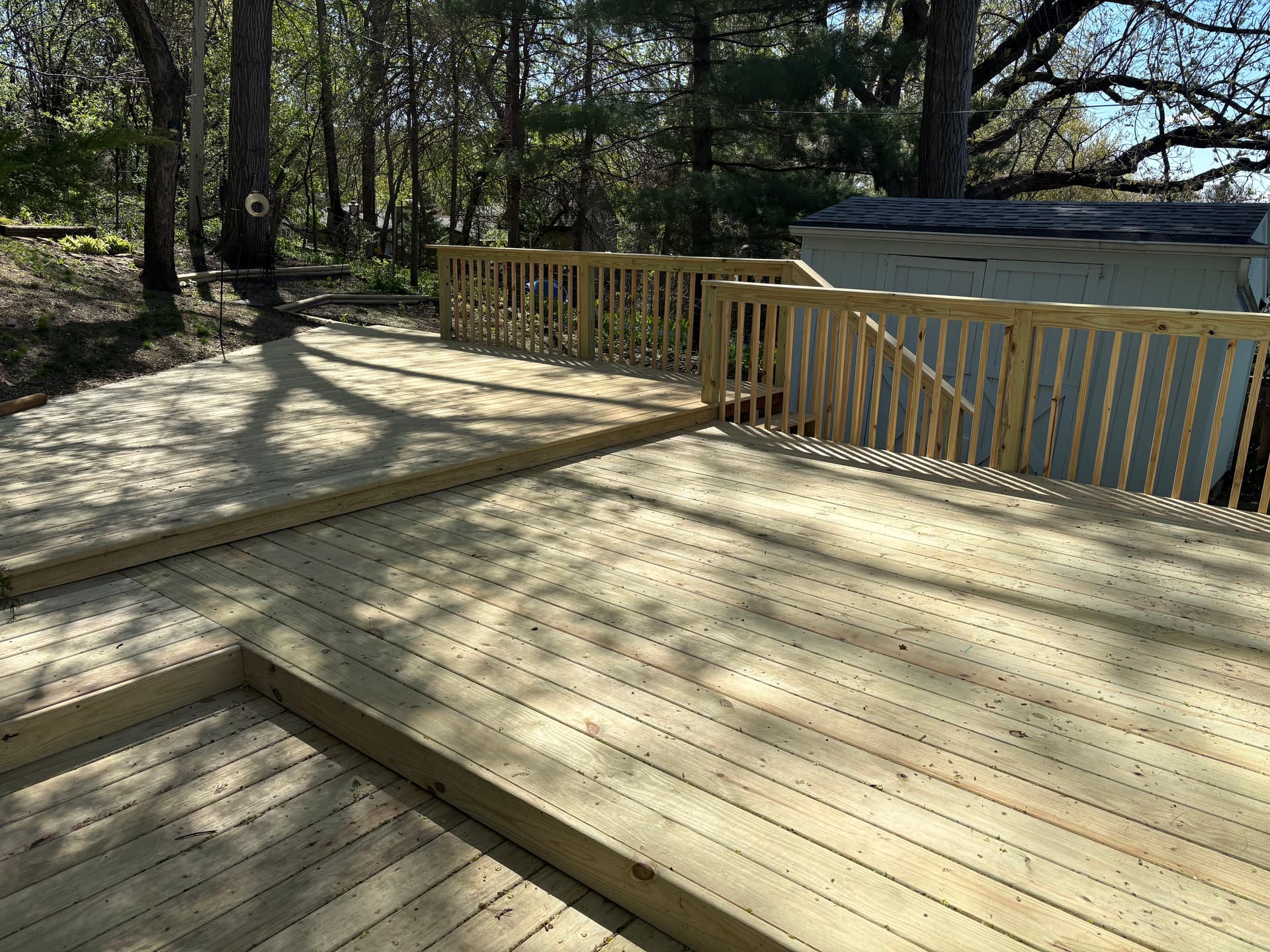
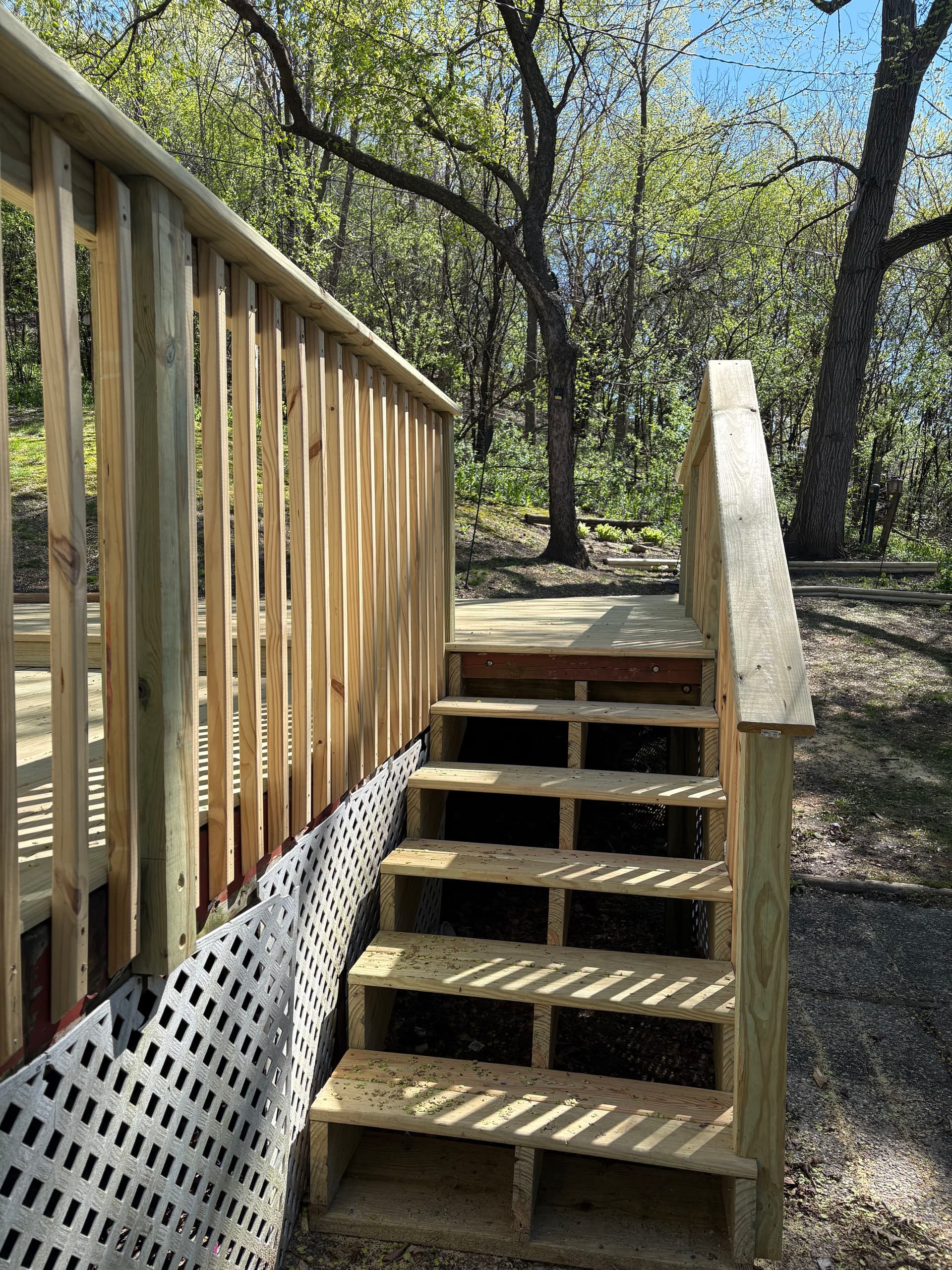
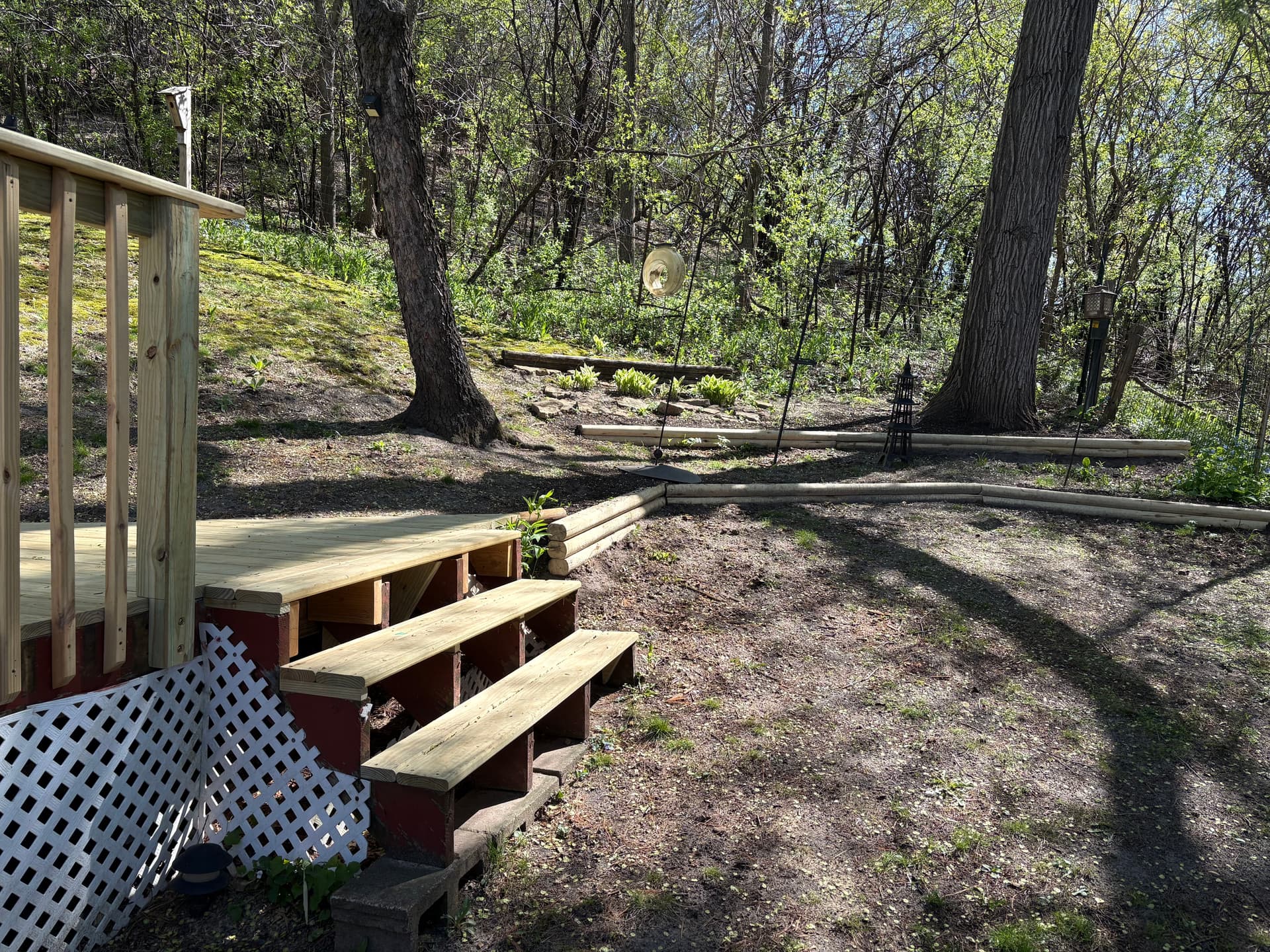
We started by repairing the framing before anything else. There's no point in laying fresh deck boards over a weak structure, so we made sure the bones were solid first. From there, we installed all-new deck boards and railings across the full space - including a multi-level layout with steps leading down to the yard. The retaining wall got updated too, tying the whole outdoor area together so it functions as one cohesive space rather than a patchwork of fixes.
What we ended up with is a deck that's genuinely safe and built to hold up. The new pressure-treated lumber throughout is clean, tight, and properly secured. The railing system is sturdy with consistent spacing on the balusters. The stairs are well-supported with solid stringers. None of that happens by accident - it comes from doing the prep work right and not cutting corners on materials or fastening.
Projects like this one remind us why it matters to look beyond the surface. A deck can look rough on top but still have good bones, or it can look fine on the outside while hiding real structural problems below. Either way, we'd rather know what we're actually working with before we start building. That approach is what keeps a deck safe for the long haul - not just for one season.